JUF and You

Subscribe to JUF's
e-mail newsletters:

The Guide
The Guide to Jewish Living in Chicago
offers a comprehensive, up-to-date listing of Chicago-area Jewish organizations, resources, products, and services.
Memorials & Celebrations
Celebrating, rejoicing or sending love to a friend in need? JUF has a card or certificate designed just for you.
E-mail this page   E-mail this page      Print this page   Print this page      Bookmark and Share

Streets of the Westerners

Stuart Schoffman
The View From Jerusalem

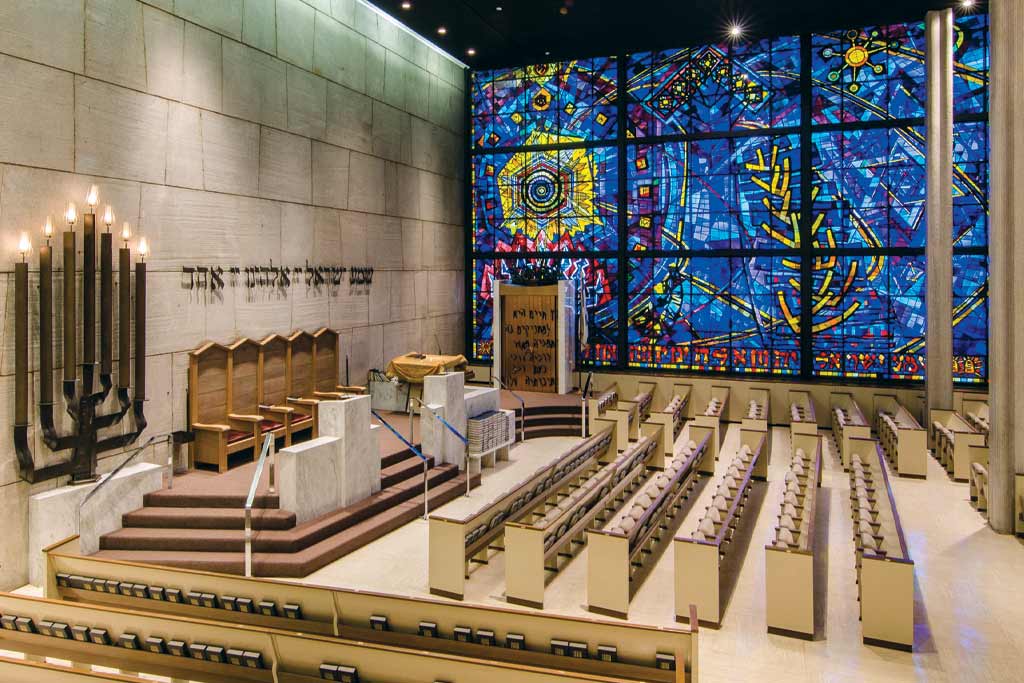
One of the more interesting streets in Jerusalem is the one named for Gershon Agron, founding editor of the Jerusalem Post and the city’s mayor in the late 1950s. At the top of the street is a Conservative synagogue that used to be a church. Next door is the Convent of the Sisters of the Rosary. Then comes the American Consulate, formerly the Arab-style home of a 19th-century Lutheran missionary. Next, a former monastery, now an annex to the Consulate. Across the street is Independence Park, which merges with a Muslim cemetery.

Down at the bottom of the hill, at the corner of Agron and King David Street, you will find the chic new Mamilla Mall, which leads straight to the Old City’s Jaffa Gate; and the David Citadel Hotel, which used to be the Hilton. This is how it goes in Jerusalem: the Inbal hotel was once the Laromme, and the Dan Panorama the Moriah. But the King David hotel has retained its name since it opened for business in 1931.

In 1929, on the southwest corner across from the cemetery, the Supreme Muslim Council, led by the Mufti of Jerusalem, Haj Amin al-Husseini, built a luxury hotel called the Palace.  It was an architectural gem, designed by a Turk and built by three contractors: one Arab and two Jews. Its elaborate, eclectic exterior was studded with arches, balconies, and stone carvings, and its lobby boasted marble columns and Persian rugs. It soon went out of business and was turned into offices of the British Mandate. For many years after 1948, it housed Israel’s Ministry of Trade and Industry.

Today, this landmark is an enormous shell, its eviscerated façade presiding over a vast hole in the ground. Construction is underway for its next incarnation as the Waldorf Astoria, a luxury hotel aimed at wealthy Orthodox and ultra-Orthodox tourists who want easy access to the Western Wall. Next door two apartment towers rise above King David Street, intended for a similar clientele.

What visitors seldom notice, and where Jerusalemites seldom visit, are two tiny streets that lead from Agron to Moses Hess, a well-traveled street near the King David and across from Hebrew Union College. Hess was a 19th-century German Jewish socialist, a friend of Karl Marx, whose book Rome and Jerusalem (1862) is an early and influential Zionist manifesto. One of the two tiny streets is named for Ludwik Zamenhof, the Polish Jewish ophthalmologist who invented Esperanto, the universal language. The other is called Rehov HaMa’arivim, the Street of the Westerners.

At last, you are thinking, a street named for that under-appreciated Israeli minority group, the Anglo-Saxon olim! Not exactly. Here, the westerners were from northwest Africa: Moghrabim, Moroccans, who made aliyah to Jerusalem in the 1860s with their leader, Rabbi David Ben-Shimon (1826-1879), also called the Tzuf Devash, the name of a book he authored. In Hebrew, it means “honeydew.”

The sweet acronym of David Ben-Shimon was doubly appropriate on the weekend before the holiday of Rosh Hashanah, when the historic Moghrabi neighborhood—also known as Mahaneh Yisrael—brimmed with Israeli visitors, locals and out-of-towners, enjoying the city’s third annual architectural festival, “Houses from Within.” Scores of homes and other buildings all over Jerusalem were opened to the public for two days, free of charge. Not by coincidence, the Waldorf Astoria Collection, the Hilton subsidiary that controversially gutted the old Palace, co-sponsored the program.

Among the open houses I visited was a modest two-story residence on Rehov HaMa’aravim. In the downstairs apartment sat an elderly woman and her daughter, who had lived there since arriving from Turkey in 1949. The place looked a bit grim, not much changed since then. The upstairs flat, by contrast, was a model of stylish renovation, with original stone flooring and an airy modern kitchen with a ringside view of the interior shell of the future Waldorf. People lined up to see the apartment. Volunteer guides let us in a few at a time, providing background information as we waited.  

Rich Americans, declared the young guide, are buying up properties, raising values, pricing locals out of the market. Historic houses of Mahaneh Yisrael are torn down to make room for fancy apartments that the American owners will use maybe twice a year. It hurt me to hear this. I raised my hand and pointed out defensively that it’s wrong to blame just the Americans: British and French Jews, and even well-to-do Israelis, are changing the nature of the old neighborhoods. The young guide apologized, duly chastened. But of course I knew exactly what he meant, and shared his frustration.

There is something unseemly about the displacement of longtime residents by real estate developers and absentee owners. At the same time, I want American Jews to be deeply invested in Israel, even if for some visitors we are like a theme park. Israel is a vital cornerstone of American Jewish identity. I am a big fan of Birthright Israel and of “gap” years in Israel for American high school graduates, but I sure wish they would stop referring to Emek Refaim (“Valley of Refaim”), the main street of my own neighborhood, as “Emek,” as in “I’ll meet you on Emek.” This is more than a linguistic quibble: it’s a symbol of something deeper.

Down the block on Rehov HaMa’aravim was the home of an older couple, a house built by Moroccan Jewish settlers in 1868. It was a model of loving preservation, with a domed ceiling and original ceramic tiles, and a wooden plow from time immemorial mounted on the wall. The owner told us he had bought the place in 1969, from an Arab family. In 1929, he said, during the notorious riots, Jews were driven out of the Moghrabi neighborhood by Arabs. During the 1948 war, the tables turned, and Jews drove the Arabs out, though some Arabs found refuge at the convent at the top of the hill, and came back to their homes when the shooting stopped. In 1969, the man said, there were a number of Arab families still in the neighborhood; now, there’s only one. 

In Jerusalem, the wheel turns and turns. Old and new incessantly collide. Jewish becomes Arab becomes Jewish. This is a mixed city: always has been, always will be. It is a special place that requires special treatment. Today, in Arab neighborhoods, residents are being evicted to make way for Jewish newcomers. Legal grounds are found. Still, resentments build.

Not every Jewish visitor will have time to see the shrinking Moroccan quarter hidden between Agron and Hess. Every visitor, however, will come to the Western Wall, the Kotel, the holiest spot for Jews. In the 1948 war, Jordanian forces took the Old City, expelled the inhabitants of the Jewish Quarter, and destroyed its synagogues. Jews were unable to visit the Wall until June 1967, when Israel conquered the Old City.

Very few visitors today are aware that until 1967, the prayer area at the Wall was a narrow alley. The huge Western Wall plaza you see today was once an Arab neighborhood -- known as the Moghrabi Quarter. Immediately after Israel’s victory in the Six-Day War, the residents were evicted and their rundown dwellings razed. This, too, is part of our shared history, and worth remembering.

Posted: 10/1/2009 2:09:41 PM

Content Rating

  Average 5 out of 5

Reviews

By Anonymous
Awesome!