My family and I live on a street called Hatzfira. It’s pronounced “hots-fee-RAH” and is named, as are other streets nearby, for a Hebrew newspaper published long ago in Eastern Europe. The name means either “The Dawn” or “The Siren,” a nice conflation, especially if you’re a professional ironist.
I wake up early with the birds, but I am not the sort who springs from bed at daybreak, brews a barrel of java (like Balzac, who wrote a hundred novels) or scoots to the nearest Starbuck’s (mine is called Aroma, and has much better coffee), and hits the keyboard at 120 wpm. My writing metabolism is more languid, a condition exacerbated by glacial four-finger typing. Forty-five years ago at the Yeshivah of Flatbush, the boys in my high school class took 10 mandatory hours of Talmud a week (mainly tort law, or so it seemed) while the girls had five, plus five career-oriented hours of typing. I have a faint recollection of what to do if two camels collide in the middle of downtown Babylonia, but blogging is not my natural bag.
What would I write, if I were moved to uncork (or “twitter,” though I am not yet sure what that means) round-the-clock dispatches about what I think about everything? That my dog died?
Actually, my dog did die, just the other week, and I’ve been quite despondent. I was never a dog lover in Brooklyn; Orthodox folks like us did not have dogs, and were trained to fear them. (Old joke: Yankel says to Moishe, his old yeshiva mate who got baptized, “You, you were the best in Talmud, and now this?! Is there really nothing in Judaism for you?” The other says, “Yankel, relax. I’m still afraid of dogs.”)
Eleven years ago we inherited a year-old female German shepherd from a woman who had died, a family friend. My children and the dog grew up together, played together, slept together, and her passing marks the end of their childhood. We are all doubly nostalgic, especially since my son is in the army now, and my daughter will soon graduate from high school. After a year of volunteer work in Jaffa, she’ll join the IDF too. The empty nest. We should get another dog soon. I hope another shepherd.
C’est la vie, but in Jerusalem a German shepherd is a Zionist statement. My father was born in Czarist Russia, and would never ride in a Volkswagen; and I grew up believing that big dogs are anti-Semites. A German shepherd for me was a dog with an armband, but in Israel, our dog was a dog, not an idea. Many years ago when she was young and frisky, we took her up to Yad Kennedy (the Jerusalem memorial to the young slain president, shaped like a tree stump), and let her run off the leash. A carload of yeshiva boys with New York accents, maybe doing a pre-college gap year in Israel, disembarked and strolled among the pines. Suddenly, one cried out: “Look, a Joimin shepid, in Eretz Yisroel!” That used to be me, mutatis mutandis.
Today it rained, and the birds were quiet at dawn. I woke up later than normal and stayed in bed, depressed. The house seems so much emptier without the dog. Also, the economy in the world is terrible. We Israelis, as a society and culture, are not as fixated on that as folks are in the Old Country, not so much because Madoff is a foreigner, or that this doesn’t affect us—believe me, it does—but because of the other meaning of the name of my street: The Siren.
In the days to come, the sirens will sound twice throughout the land, shortly after Pesach on Yom HaShoah, and again on Yom HaZikaron, Memorial Day, one day before Independence Day. The thick cloud of tragic memory continues to eclipse the bright sun of our freedom, a condition that mocks metaphor. We, a traumatized people, are perennially hobbled by our inability to trust the Other. I’ve lived here for 20 years—one-third of my post-Holocaust life—and the blockage has only gotten worse.
Needless to say, lest I be misunderstood, the enemy is also very real. Many thousands of Israelis have been killed and maimed by terrorists, and in wars. We here never lose sight of that, nor are we allowed to, either by the enemy or by the official ethos of the Jewish state. We must never forget, and never again be weak. But we must also, in our perilous neighborhood, strive to elect government leaders who combine the wisdom, bravery, poetry, and moral generosity of the finest Judges and Prophets of ancient Israel. On that score, we Israelis may not have been doing so well lately.
On top of all that, the dog died. But I dragged myself from bed, scanned the newspapers, sighed heavily, and reached for an interesting Hebrew book published in 2007 by an Israeli academic named Oren Soffer, entitled (as rendered into English on the copyright page) “There is No Place for Pilpul! HaTzfira Journal and the Modernisation of Sociopolitical Discourse.” “Pilpul” means Talmudic hair-splitting, and Hatzfira, aimed at modern Jews, unflaggingly promoted practical scientific thinking, Western education, and professional training among its readers.
At first, Soffer explains, the paper’s editor, Nahum Sokolow, dismissed Theodor Herzl as a “dreamer,” and the Zionist project as “nothing but a game,” but after attending the first Zionist Congress in Basel, he changed his mind. “We are not frozen, stubbornly embalmed in our thinking,” declared a lead editorial in December 1897. “We have but one goal: the good of the Jewish people.” Every “serious plan” to ameliorate the Jewish condition should thus be “strengthened and embraced.” By 1905, Sokolow was using flowery messianic language to imagine a “tabernacle of wisdom” in the environs of Mount Moriah, a Hebrew University in Jerusalem.
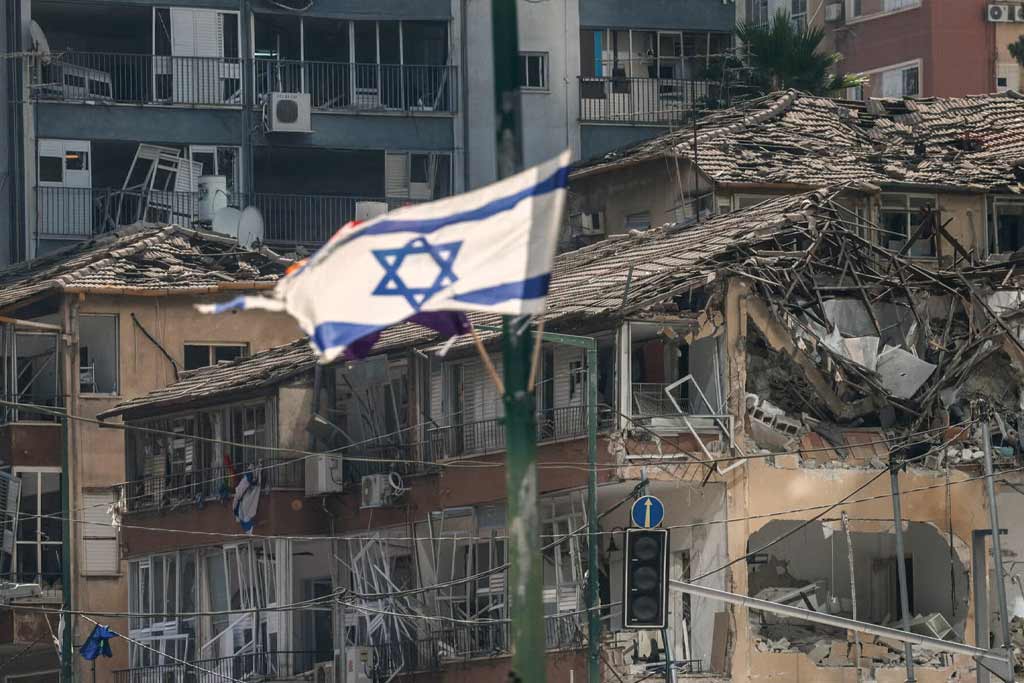
Good stuff, I thought. Today, too, old frozen ways of thinking need to be thawed out and re-imagined. Something fresh and bold must be done to still the unscheduled sirens of Sderot and Ashkelon and Kiryat Shmona, where Hamas and Hezbollah pose a terrifying threat. Every time I hear the wail of an ambulance, I listen for the telltale cacophony of sirens, so common in Jerusalem a few years back, that signals a suicide bombing. Just the other day at a Haifa mall, such a catastrophe was narrowly averted, but we are running out of miracles.
So I took my cup of coffee, and as I sat slowly down to write, a warning siren suddenly began to wail, the same scary sound I recall too well from the Gulf War of 1991, when Saddam hurled his Scuds and I was a nervous rookie. But I am a rookie no longer. The clock said 10, a nice round number suggesting this was (I dearly hoped) merely a test. I got up and turned on the TV and found not an emergency bulletin, but the rerun of a show my kids would watch when they were small and innocent, and the dog was still a dog.
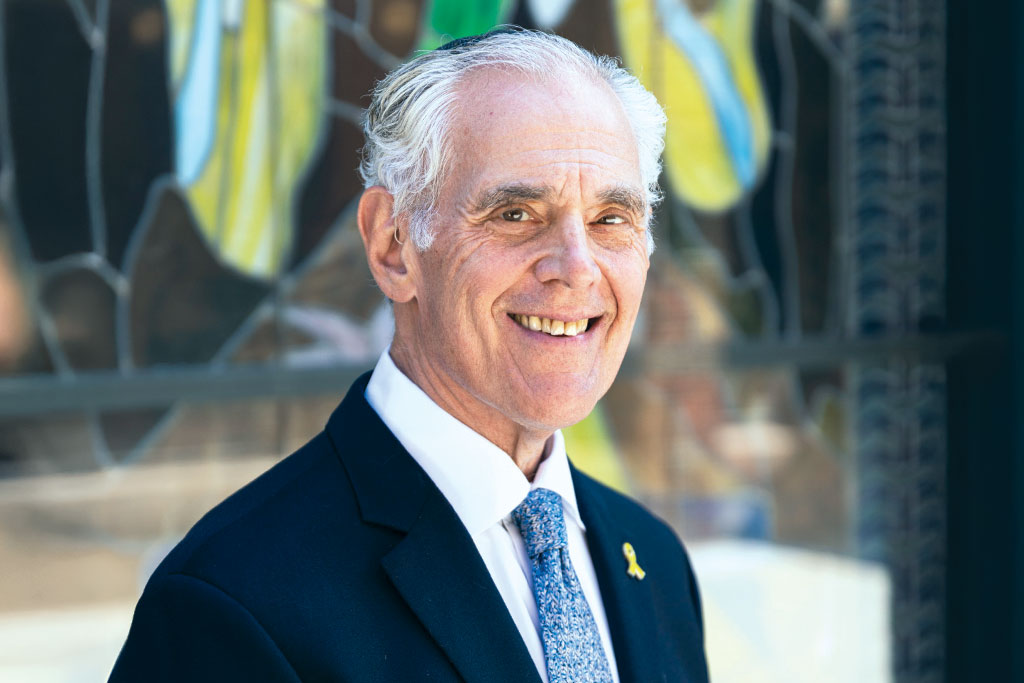
Stuart Schoffman is a columnist for JUF News and an associate editor of The Jerusalem Report.