JUF and You

Subscribe to JUF's
e-mail newsletters:

The Guide
The Guide to Jewish Living in Chicago
offers a comprehensive, up-to-date listing of Chicago-area Jewish organizations, resources, products, and services.
Memorials & Celebrations
Celebrating, rejoicing or sending love to a friend in need? JUF has a card or certificate designed just for you.
E-mail this page   E-mail this page      Print this page   Print this page      Bookmark and Share

Silent Memorials

Yehiel Poupko
Thinking Torah

We have begun the seven-week period that leads to Rosh Hashanah and the exhilaration of a new year. At the same time we, all of us, will never again see this year 5769. The old year is guttering and dying. We, each of us, will soon have one year less. This is as it must be.

In this season we read the Book of Devarim. It may well be the most intellectually difficult of the five books of the Torah. It is filled with the literature of ideas and the literature of mitzvot and laws. Only at the end is there an event, a narrative. It is very brief. There are only two actors. There isn’t much action. It is a simple, quiet event. It is the death of Moshe. He dies on Mt. Nebo on the Plains of Moav overlooking the Land of Israel, the land to which he has brought the Jewish people, and the land into which he will not enter.

This man, Moses, the central figure of the Torah for four of its five books, will now die. This man, Moses, brought up in the Pharaoh’s palace, who rebelled against Pharaoh; who first heard the word of God at the Burning Bush; who confronted Pharaoh with a cry that echoes down to this day, to wherever people are still in shackles, “Let My People Go!” This is the man Moses who brought the full force of God’s Creator power over nature when he turned the Nile red, made Egypt swarm with frogs, and brought lice, pestilence, boils, hail, and locusts amidst huge drama upon all of Egypt. This is the man who in the sight of all the Jewish people marched them through the desert, a pillar of cloud by day, a pillar of fire by night.

This man Moses ascended Mt. Sinai and received the Torah from God. His was a life of indescribable visual images. His was a life filled with powerful sounds, the thunder and lightning at Sinai, and the voice of God proclaiming to Israel and to the world, “I am the Lord your God who took you out of the land of Egypt!” This is the man who said at the beginning of his career that he was not a man of words; that he could not speak, that he stammered and stuttered, and whose lips then spoke for 40 years the greatest of words, the Torah. This is the man who prayed to God in defense of the Jewish people with an eloquence unparalleled.

After forty years of leading Israel through the desert, it comes time for him to die. He is all alone on top of Mt. Nebo. His sister Miriam and his brother Aaron have died. His death is quiet, not a sound emerges from it. All we are told is that he was 120 years old when he died and that at the moment of death his eyesight was not dimmed, and his vigor had not departed him. A man, this man Moses, at the moment of death, in full possession of his physical and intellectual faculties, and not a word as he leaves in silence. Then we are told that the whole House of Israel mourned Moses for 30 days.

Then the days of mourning for Moses ended. We have no record of testimonials, or of celebrations of his life. This Torah so artful at giving voice to sound and speech is mute. The man who gave the Jewish people and the world the book of all books, the foundation of Western civilization, the man who said he was not a man of words, and who by the end of his life had spoken and taught the most important words we will ever know, dies in utter silence. His mourning period is just that, the silence that marks absence.

I have had the sad merit in recent weeks and months to be present as some good, old people, well and beautifully lived, returned their souls’ breath to the Creator, who breathed life into them decades earlier. They were surrounded by family in silence. There are, the Talmud tells us, sounds that are heard from one end of the world to the other. One of those sounds is the voice of tyrannical regimes. In this case the rabbis meant the Roman Empire. Then along with it, the rabbis tell us, there are also two equally powerful sounds. The sound of the soul as it enters the life of the newborn baby and the sound of the soul as it departs at the end of life. These are the moments of the sublime kiss. The soul is given in a kiss and the soul is taken in a kiss. It arrives and it departs in silence. Those who lived well and are surrounded by those who love them, honor this departure much as it takes place, with the silence that pays reverence to the awe and indeed holiness of the moment. 

The year now enters its last seven weeks. The Book of Devarim, quite literally the book of many words, will be read in the synagogue. As it is read, the year 5769 will slowly slip away week by week. As it does, we, like ancient Israel, who beheld the death of Moses, know that when good people who lived life with justice and righteousness leave this life, we stand and witness in the purity of silence.

As virtuous men pass mildly away,
    And whisper to their souls to go, 
Whilst some of their sad friends do say,
    "Now his breath goes," and some say, "No."
So let us melt, and make no noise,
    No tear-floods, nor sigh-tempests move
(From A Valediction Forbidding Mourning, by John Donne)

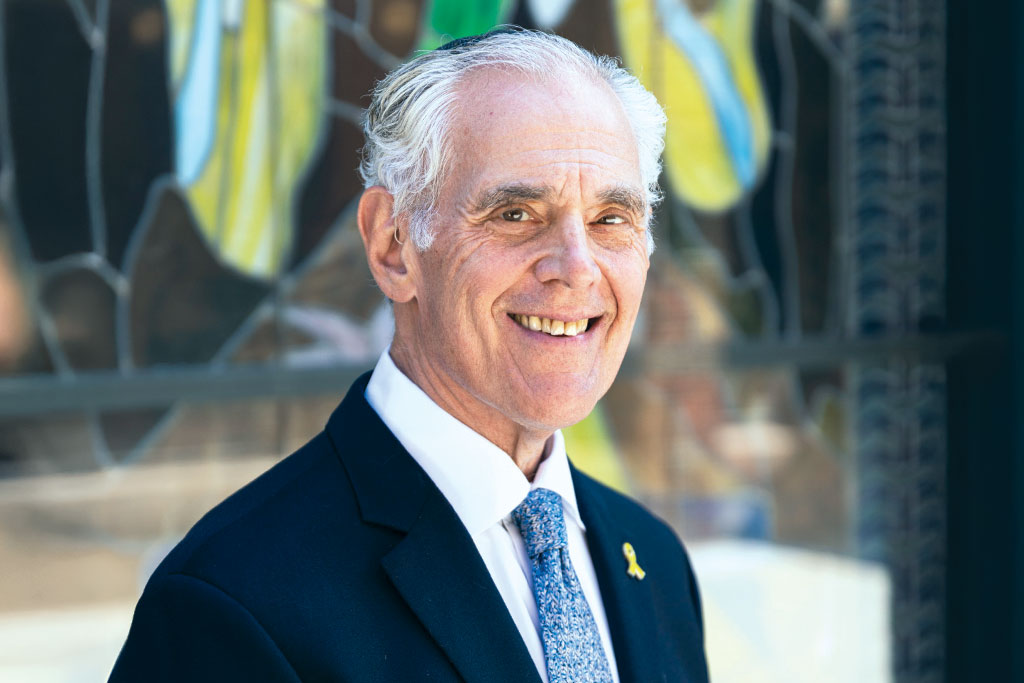
Rabbi Yehiel E. Poupko is Judaic Scholar at the Jewish United Fund/Jewish Federation of Metropolitan Chicago.

Posted: 7/30/2009 10:23:34 AM

Content Rating

  Average 0 out of 5