JUF and You

Subscribe to JUF's
e-mail newsletters:

The Guide
The Guide to Jewish Living in Chicago
offers a comprehensive, up-to-date listing of Chicago-area Jewish organizations, resources, products, and services.
Memorials & Celebrations
Celebrating, rejoicing or sending love to a friend in need? JUF has a card or certificate designed just for you.
E-mail this page   E-mail this page      Print this page   Print this page      Bookmark and Share

The Land

Yehiel Poupko
Thinking Torah

The Book of Bamidbar will be read in the synagogue from Shabbat of May 23 through Shabbat of July 18. This is the book in which Israel wanders in the desert until it reaches the Plateau of Moav, poised to enter Eretz Yisrael. The book ends with great success: God keeps the promise made to Abraham, Isaac, Jacob, Sarah, Rebecca, Rachel, and Leah; the Jewish people make it to the very shores of the Promised Land. It is useful to go back, review old verities, and ask some basic questions just to keep ourselves fresh. Why does Judaism, alone of all religions, hold that land is necessary for the ultimate expression of the religious life—this despite all of our remarkable accomplishments in the past 2,000 years outside the land of Israel.

To understand sacred history one must go back to creation when God brought order out of chaos. God entrusted this good creation to Adam and Eve, "to till and tend" the garden (Gen. 2:15). But they committed the sin of hubris, and were expelled from the garden.

God entrusted creation to humanity for the next 10 generations, but again humans sinned—committing the sins of violence and corruption (Gen. 6:12-13). God brought a flood and humanity was destroyed.

God then entrusted the order of creation to Noah, who was followed by another 10 generations. But again humanity sinned with hubris, constructing the Tower of Babel, and was dispersed over the Earth, with some 70 nations allotted a parcel of land where it could develop its national culture (Gen. 10).

When God despaired of humanity as the custodian of harmony, justice and righteousness, God entered into the Covenant of Peoplehood with Abraham and his descendants to be God's chosen people. To fulfill this role, the children of Abraham and Sarah also needed a plot of land—given not as a reward, but as essential to fulfill the covenantal purpose: the sanctification of everyday life.

This people chosen by God, unlike all others, would have the task of constructing its life according to the mitzvot, the commandments of the Torah, to be fully revealed later at Mount Sinai. Since Judaism's purpose is the sanctification of ordinary life, communal and individual, most of the mitzvot have to do with agriculture, commerce and property.

The Covenant of Peoplehood blossomed into the Covenant of Torah and mitzvot in the revelation at Mount Sinai. Taken together, the two covenants mean that Judaism is an indivisible partnership involving God, Torah, people and land.

According to the Torah (Gen. 13:14-17; 15:18-21), the Covenant of Peoplehood is unconditional and immutable, as is the grant of the land to the children of Abraham and Sarah. Only after the covenant at Sinai, in which Israel pledged to be faithful to the mitzvot, does residence in the land become conditional upon fulfillment of the mitzvot.

Thus, the worthiness of a given Jewish community is unrelated to the grant of the land itself. In the latter part of the First Temple period, some of the central mitzvot of the Torah were widely neglected, and for that neglect Israel was exiled; but it returned to its homeland about 70 years later and built the Second Temple, expressing Israel's dream and faithfulness, continuing to develop its national religious culture.

The Second Temple was destroyed by the Roman Empire in the year 70 CE; but between then and the conquest by Muslim armies in 638, the rabbis developed a remarkable culture whose sacred literatures united the Jewish people in all the lands of exile. Having lost sovereignty in the land of Israel, the rabbis moved the Jewish people into a new kind of home, into "residence" in the Book, which gave the Jewish people and the world the Mishna, the Talmud, the great Midrashic works and the Siddur, the prayer book.

Through 2,000 years the flow of scholars and the faithful to Israel continued unabated, and after 638, Jewish communities continued to live in Israel. Around the 10th century, in Tiberias the Masoretes produced an authoritative text of the Hebrew Bible, which ensured that the dispersed Jewish people had one common sacred text. Jewish scholars continued to produce seminal works of law, biblical interpretation, liturgy and mysticism. Centuries later, following the expulsion of Jews from the Iberian peninsula in 1492, Jewish refugees gathered in the 16th century in Tsefat (Safed), in the north of Israel. There Rabbi Joseph Karo produced the authoritative Code of Jewish Law, Shulkhan Arukh.

The Code of Jewish Law then made its way to Krakow in Poland, where Rabbi Moses Isserles adapted it for the Jews of Europe, binding together this wandering people by means of one book of practice. From Tsefat also came the Sabbath song L'kha Dodi, "Come My Beloved," the song Jews the world over soon sang, and still sing, every Friday evening.

The fruit of the land of Israel united the landless people of Israel. Upon this abiding physical and religious connection was built Zionism—a yearning to return home that reached back two millennia. The rise and ultimate success of the modern Zionist movement, beginning in the 19th century, contains a remarkable irony: What had been nurtured and sustained by religious faith became realized in a secular national liberation movement as the State of Israel.

What then is the Jewish religious understanding of the return to sovereignty in our ancient homeland? The faithful Jew believes that God is the God of history. The return to sovereignty demonstrates that God remains faithful to His covenant with the Patriarchs and Matriarchs, acting in history during our lifetime, enabling our return to the land and to sovereignty.

But let me state unequivocally: this belief does not endow the State of Israel itself or any government of Israel with divine approval or divine right. The state and the government are the creation of the resolve and the intellect of the Jewish people, the human Jewish attempt to translate this remarkable event into daily reality.

The return to the land is a necessary but not sufficient condition for Jews to fulfill the covenant. Political Zionism provides the Jewish people only with the opportunity to try to live out its covenantal destiny, not with Israel as a messianic phenomenon.

At Sinai God commanded Israel to dwell in the land of Israel to assume full control of its life and its destiny. When the Jewish people was exiled, powerless and stateless for two millennia, it was unable to be fully responsible for its own welfare. As the Reform Movement best stated it in 1997, the restoration of the Jewish people to its ancestral homeland represents a historic triumph that provides it with a physical refuge; the possibility of religious, spiritual and cultural renewal on its own soil; and the realization of God's promise to Abraham.

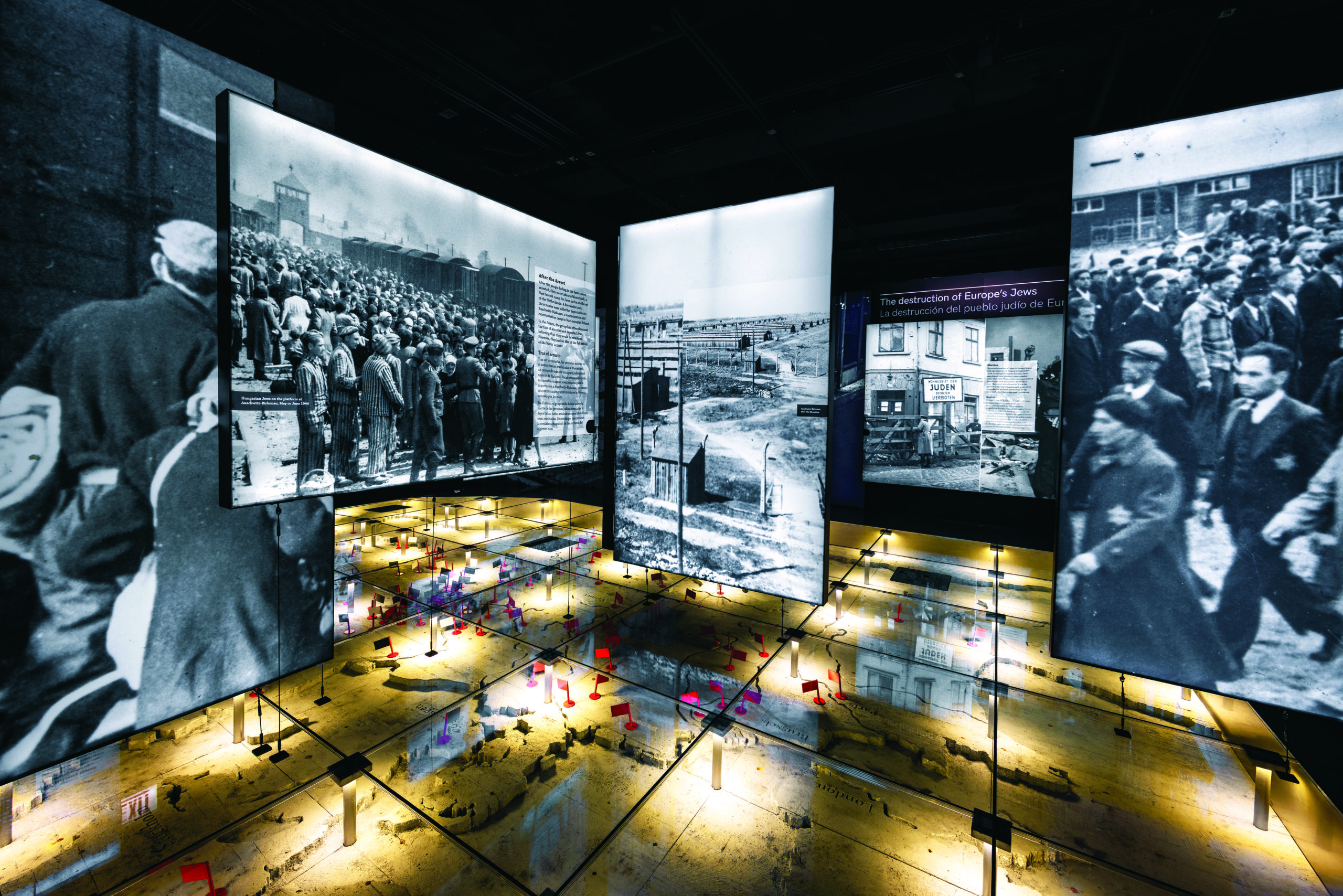
Jewish powerlessness culminated in the Holocaust. Even as we mourned the loss of one-third of our people, we witnessed the miraculous rebirth of Medinat Yisrael—the State of Israel, uniting Jews the world over through the latest expression of our understanding and existence as a people and as a nation.

We Jews are believers, and in the presence of extraordinary events, we believe that we witness God's manifest beneficence and faithfulness—that by a miraculous act we have been blessed to regain political sovereignty in our ancient homeland. We stand in a state of thanksgiving and abiding awe, overwhelmed by the fact that this great event followed by just a few years the destruction of 6 million European Jews, thus providing a refuge for the survivors and for the 800,000 Jews driven soon thereafter from Arab lands.

For the Jewish people, the return of the people Israel to establish the State of Israel demonstrates the continuity of faith, of peoplehood and of history. God's restoration of the Jewish people to sovereignty in the ancient homeland should be a source of inspiration and instruction, not only for Jews but for all those who believe in the God who first revealed Himself to Abraham.

That restoration is a sign that God is faithful to God's promises, no matter how ancient and seemingly antiquated they are. The continuity of the Jewish people through 2,000 years of exile, diaspora, homelessness and suffering, their renewal in their homeland, is a sign that God remains faithful to the covenant.

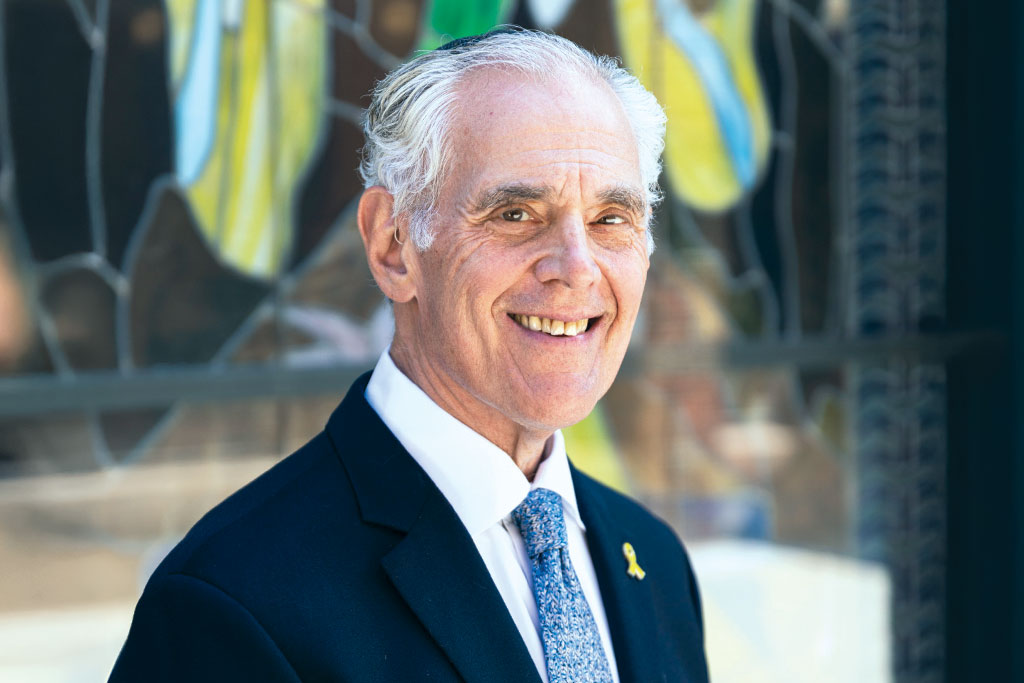
Rabbi Yehiel E. Poupko is Judaic Scholar at the Jewish United Fund/Jewish Federation of Metropolitan Chicago.

Posted: 6/15/2009 10:13:49 AM

Content Rating

  Average 0 out of 5