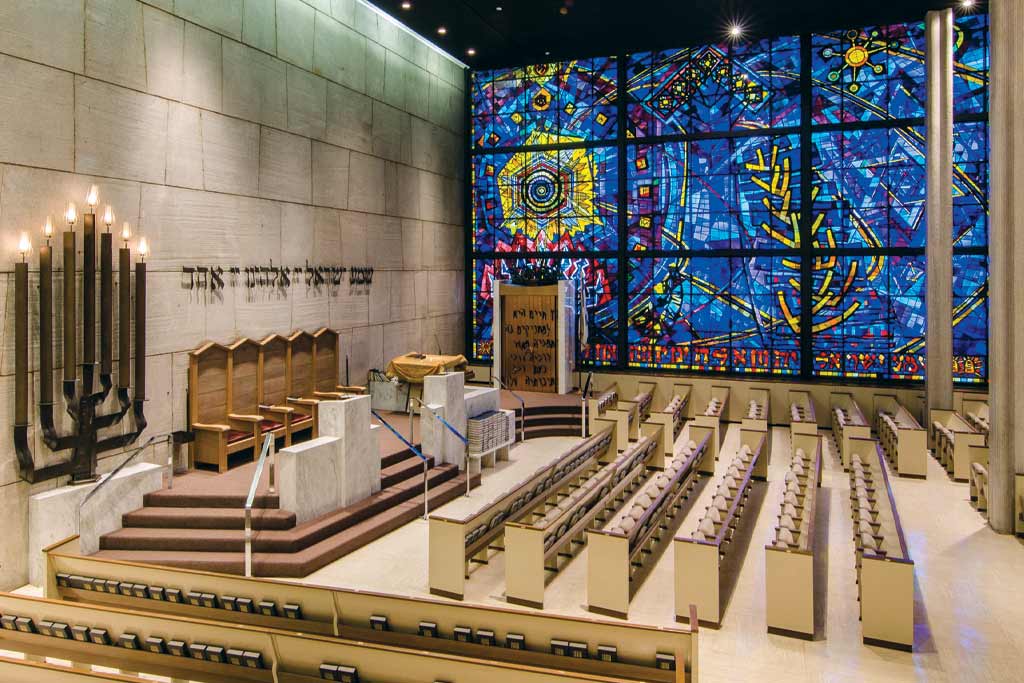
On erev Rosh Hashanah, the same day the Iranian regime staged massive “anti-Zionist” demonstrations, I sat in the one-room shul in Wooster, Ohio where my wife and I were married, lo these many years ago.
Earlier in the day she and her brother had reminisced about going to services there as children. Old men with musty, ill-fitting clothes and strong Yiddish accents would daven, sometimes in unison but more often not; sometimes in a whisper, other times their voices cracking, beseeching. They would read Torah, and when the davening was done they would drink schnapps. Most had come to the New World in the early part of the last century, often fleeing persecution and pogroms; others—including the rabbi—had come later, and with numbers seared into their arms.
The old men were tough, opinionated, not particularly ‘religious,’ but products of a Jewish culture where everyone knew Hebrew, learned Torah, went to synagogue, and spoke to God when they prayed. To be Jewish defined them. They had all learned in cheder in the Old Country, had mothers who had lit Shobbos candles and kept kosher, and fathers who had laid t’filin.
Building the shul in 1950 had been a great achievement for those immigrant and refugee peddlers and scrap dealers whose children, now in their seventies and eighties, would eventually form the civic backbone of this all American small town.
I remember 30 years ago when the bulk of those old men were dying, wondering what would become of that little shul. First a Conservative rabbi had replaced the Holocaust-survivor Traditional rabbi, and then a Reform rabbi or two had made their way to the little bimah, barely large enough for the pulpit and a few chairs. After them a series of Reconstructionist rabbis had come to Wooster for their first congregational assignment.
For years there had been no regular rabbi; a series of committed lay people, and educators who traveled to Wooster, tended to the community. When my mother-in-law, of blessed memory, was buried, a rabbi was called from Akron, 35 miles away. (Today, a Reconsutrctionist student rabbi leads services and teaches the children.)
As for the community today, there are a smattering of Jewish students and faculty from the College of Wooster, and some children and grandchildren of the old generation who still live in the area, known for its good quality of life. Joining their ranks is an odd assortment of converts to Judaism, former Christians from this very Christian town who went searching for the roots of their faith, and found their way through the doors of Knesset Israel Temple.
Now the scent of musty clothes is long gone. The daveners have long been silent; gone are their stories of escape from Cossacks. Lilting, Yiddish-inflected voices echo only in the fading memories of my generation. Whiskey long ago replaced schnapps. Our children have no clue what my wife and her brother were reminiscing about, their words must have sounded hollow, like the monotonous chant of vacant shells. And the old men, were their ghosts to incline an ear towards the tiny sanctuary, would shrug and fly away, hearing little to remind them that their spirits had come home.
At services, with a guitar strumming, I found myself thinking all this in the same moment that I thought about Iran. The wily and cynical liars of Teheran—who cast human history as a Jewish conspiracy, who deny history’s central facts—bank on our collective memory loss, which seems a sad byproduct of the headlong ‘progress’ of the West.
If we forget from where we came, how will we know where we are going? If we no longer remember who we were, who will we be? If we do not redeem the claim check of our heritage, who will care? If we ourselves regard as banal our own evaporation, how will we stand in our own defense?
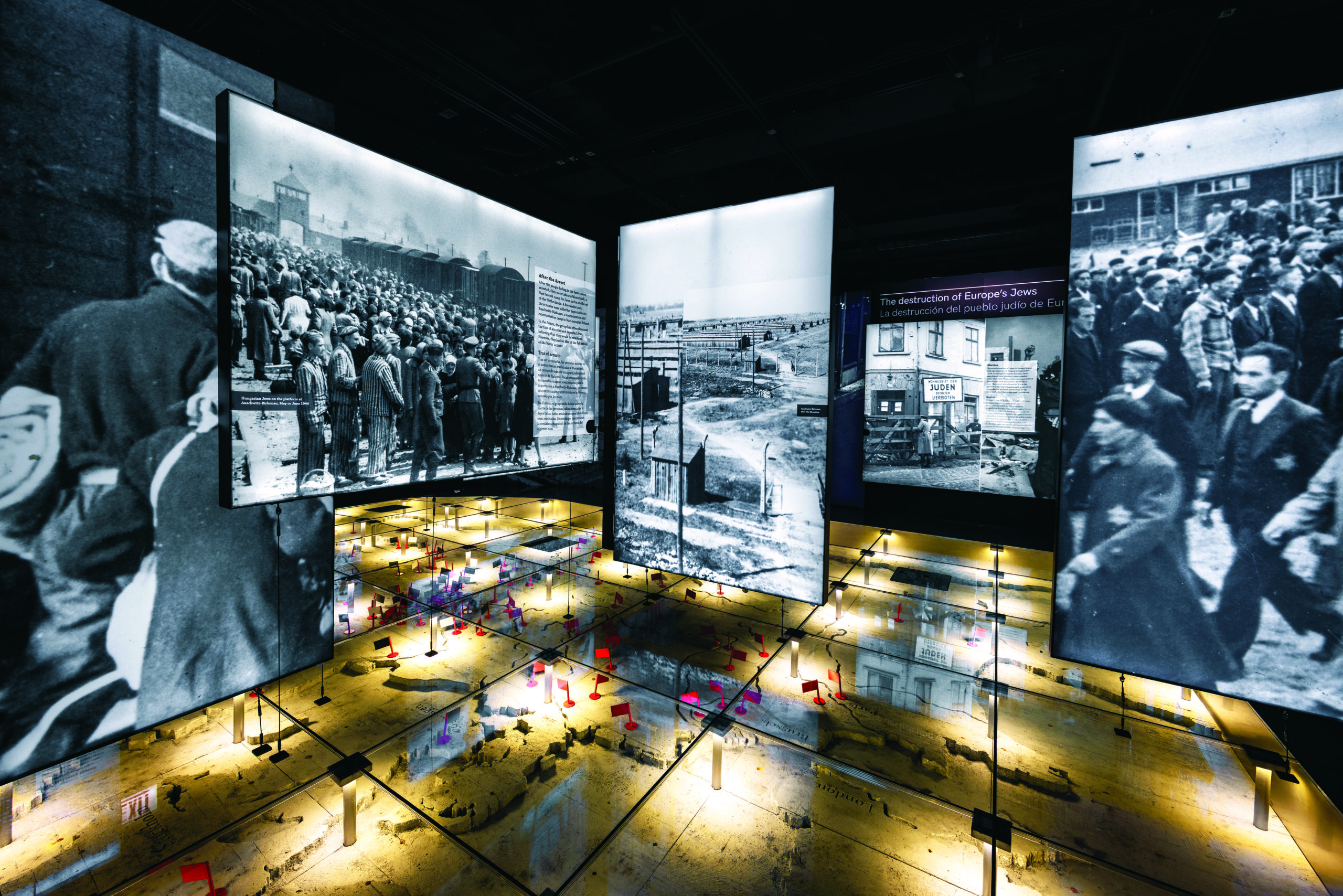
All this is not lost on those who would cast the Jewish people from history’s stage, who refer to the Holocaust, as did Iran’s president in mid-September, as “a lie which relies on an unreliable claim, a mythical claim.”
I thought, sitting in that shul during the Days of Awe, of the days of reckoning to come. As I did I yearned for the scent of musty clothes and sweet schnapps, for the lilting, crusty voices, for the eyes that betrayed the horrors they had seen, for all that would fill me with resolve.
I tried to tell this to my children; time will tell if they understood.
Lest we forget
|
Content Rating