“What haven't we done for this country? Some of us died, some of us gave speeches.”
The ironic lines of the great Turkish poet, Orhan Veli Kanik, spoof those who would exhort others to make sacrifices without themselves sacrificing. Such speeches litter history's pages.
Certainly we’re living through a time of both speeches and sacrifices—witness the events unfolding in Iran, where words and actions entwine like a double helix. We don’t yet know what will be born of this new combination of DNA; history will be the judge.
Who knows what will be the impact of the addresses about the Middle East recently delivered by presidents, prime ministers and other leaders? Will messages that instill hope and inspire efforts towards a future of greater democracy and transparency prevail? Or will the revanchist words of the likes of Iran’s Supreme Leader Ali Khamenei, who blames the “Zionist media” for fomenting protest, win the day?
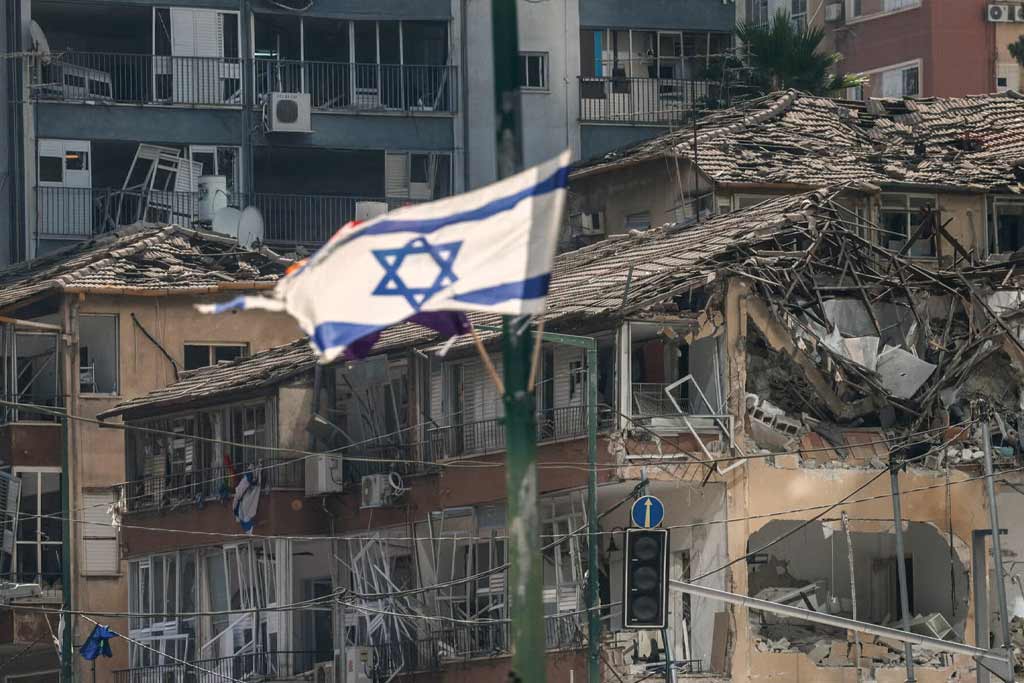
As long as Iranian leaders pursue nuclear weapons and support terror organizations on Israel's borders while continuing to speak of the Jewish state's destruction, for Israel and the Jewish people the outcome surely matters.
Even as Iran grabs headlines we recall the major policy speeches of President Obama and Prime Minister Netanyahu. Will history remember their words from this pivotal time? Will they someday prove to have laid foundations for Middle East peace, or to have paved the road to more horrendous sacrifice?
“Threatening Israel with destruction—or repeating vile stereotypes about Jews—is deeply wrong, and only serves to evoke in the minds of Israelis this most painful of memories while preventing the peace that the people of this region deserve,” Obama said in Cairo.
But did he adequately state Israel's and the Jewish people’s case? Did he properly portray our connection to the Land of Israel? Was he tough enough on terror?
Netanyahu's words also were closely critiqued, and, in the Arab world, sharply criticized, especially when he requested recognition of Israel as a Jewish state.
“With the advantages of peace so clear, so obvious, we must ask ourselves why is peace still so far from us, even though our hands are extended for peace?... We need the Palestinian leadership to rise and say, simply 'We have had enough of this conflict. We recognize the right of the Jewish People to a state of its own in this Land,'” Netayahu said.
Did he go too far, or not far enough, when he affirmed the Palestinian right to statehood, while requesting recognition of Israel as a Jewish state?
In time the answers to all those questions will become more clear, depending on what transpires in Iran.
“By declaring incumbent Mahmoud Ahmadinejad the winner, Khamenei conveyed a clear message to the West: Iran is digging in on its nuclear program, its support to Lebanese Hezbollah and Palestinian Hamas, and its defiant regional policies,” wrote Mehdi Khalaji, a senior fellow at The Washington Institute for Near East Policy. “Iranian society will not forget this historic moment and is watching to see how the free world reacts.”
“And there was love all of a sudden/Happiness all of a sudden,” Kanik wrote in another of his poems. But rarely does history render swift judgment, even in an age when speeches and sacrifices flood our screens.
What will come to pass, in Iran and in the rest of the Middle East, we’ll have to wait and see.